
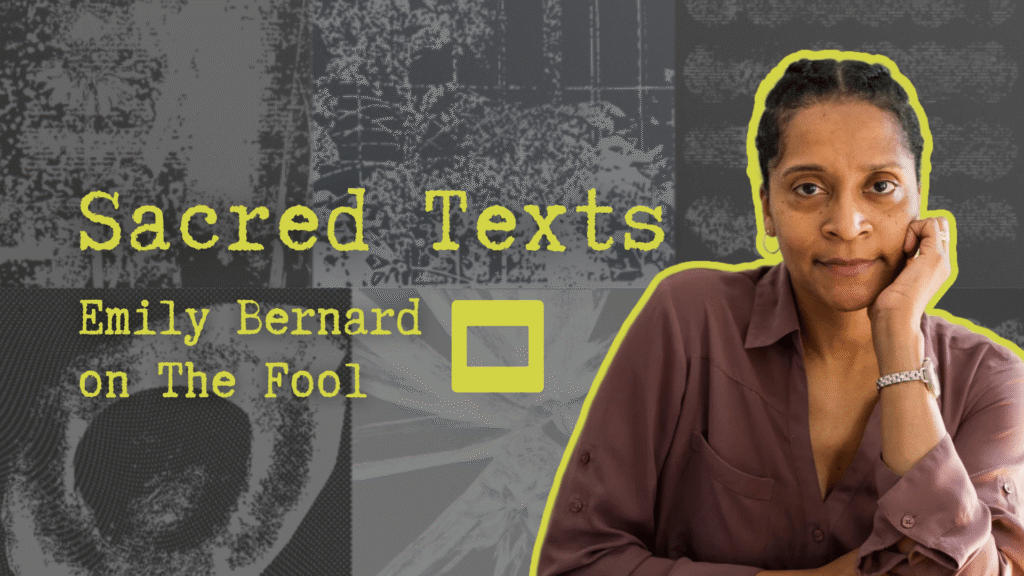
Sacred Texts is our monthly essay series in which a writer we love explores a text that has been a personal lodestar. Subscribe to our newsletter, the Here Below Supplement, to get this and more delivered straight to your inbox.
Published September 8, 2026
Here Below Supplement vol. 1, no. 1
On Hurricanes and Tarot’s Fool
by Emily Bernard
In the summer of 2021, my husband, our two daughters, and I traveled to Jamaica for vacation. I think of Jamaica as a sister island to Trinidad, where my father was born and raised. The two are not so much alike as related: daughters of the same sea, shaped by colonialism and African survival strategies, including improvisation, faith, and the particular genius each has employed in the making of culture from catastrophe.
The catastrophe of colonial rule as well as natural catastrophes, like extreme inclement weather. Hurricanes, for instance. In the summer of 2021, Jamaica experienced two significant tropical events, two “acts of God.” Hurricane Elsa passed just north of Jamaica in early July. In August, while there with my family, Tropical Storm Grace crossed the island, hailing down wind and rain, ruining crops, damaging various man-made structures, and corrupting power sources.
The vacation was also a working retreat for me. I had traveled to Jamaica with an assignment: a series of daily reflections and prayers for a book called God in Us. The commission asked me to draw upon the lectionary and to make scripture speak in the present tense. I had come to the island to write about the divine presence within ordinary human life, about God not as a distant ruler stationed above us but as a force already housed in the body, the breath, the imagination, and the human capacity to love.
At first, the assignment intimidated me. I was accustomed to writing essays, lectures, criticism, memoir. A homily seemed to belong to another order of language, sanctioned by training I did not possess and an authority I did not claim. I worried that I did not know enough scripture, that I lacked the necessary vocabulary, that I was trespassing in territory reserved for ministers and theologians.
But the pastor at my church helped me prepare. He lent me several volumes that he consulted when composing his own sermons, and I found the exchange delicious. I began to imagine the two of us as fellow writers, practitioners of the Word, each facing the same old and impossible task: to take language inherited across centuries and make it speak again in the present tense. I was not pretending to be a minister. I was beginning to recognize that writing itself had always been a kind of ministry for me.
Once I began, the work came easily. The scriptures I needed were already inside me. I had, in fact, been paying attention all those Sundays. Stories I could not have formally summarized rose to meet me when I needed them. I discovered verses lodged in my memory. To my great surprise, I knew the Bible better than I realized.
The divine word was not something I had to import into myself from a distant source. It had been entering me for years through repetition, music, ritual, boredom, longing, grief, and attention. Scripture had accumulated in me almost without my knowledge. Writing the homilies was not simply an act of research. It was an act of retrieval.
For one entry, I composed this prayer:
“In a culture driven by the promise of newer, better, and easier, let us remain faithful to the eternal truths embodied in the lessons of the cross. Teach us to cherish our trials as opportunities for growth and regard our sacrifices as occasions to remember all that Jesus endured in order to fulfill His destiny on earth.”
Reading those words now, I hear the person I was before I weathered a second hurricane—my older brother’s disappearance and suicide. Before that disaster, I believed that difficulty could become instruction, that sacrifice might contain meaning, that suffering could be transformed rather than merely endured. I was writing toward a truth that Fr. Richard Rohr would later help me name: sometimes we fall upward. Sometimes the loss of the life we imagined becomes the beginning of another life, one formed less by achievement than by surrender, humility, and a deeper capacity to receive.
But grief has made me more cautious about the language of lessons. I no longer believe that every trial arrives as an opportunity, or that suffering is bestowed upon us for the sake of our improvement. My brother did not die so that I might grow. His death cannot be justified by the person I became afterward. To say otherwise would be to turn catastrophe into a transaction and James into an instrument of my spiritual education.
I know what his death is not. What it is, I am genuinely unsure. I feel adrift between safe islands of assumptions about what anything means anymore. Like The Fool of the Tarot, I find myself embarking upon a new journey, one without guarantees.
Still, the prayer contains something I continue to believe. Suffering may not possess an inherent meaning, but meaning can be made in its aftermath. A fall may not be ordained, but the fallen person may yet discover another direction. The cross does not make agony beautiful. It declares that agony is not the end of the story.
• • •
We had been warned about Tropical Storm Grace. Friends and family worried over our safety up until the moment we boarded the plane. But we are Americans, though all four of us arrived from different ports. To be an American is to assume lights will go on the moment you flip a switch. We expect and enjoy the harnessing of wild things, like electricity. We assume nature itself will bend to our will because we have so often found a way to contain it.
That is what the storm in Jamaica offered me in miniature. The glass door appeared solid until the water made it seem theoretical. The moon, wind, and waves held their furious conference while I sat inside performing the arithmetic of escape. Nature does not become meaningful because it obeys us. It becomes meaningful when our obedience to reality begins.
I hardly ever think of myself as an American except when I have made a mistake that, in hindsight, appears to me to have been a result of hubris, naiveté, shortsightedness, or unprocessed emotion. These are among the qualities my father identified as quintessentially American. I am his child, and I usually agreed with him, even when I did not want him to know that.
How foolish it was to travel to Jamaica during the swell of a hurricane, I thought, watching the waves gather speed and force from behind the glass doors of our vacation rental home. While my family slept, I watched the water approach the outdoor furniture, creeping up the back steps that trailed right into the ocean. What can I do now?
I made a promise to myself: if the waters got so many feet closer, traveling at the same velocity, I would rouse the children and alert my husband. Run! I would command. We would never outrun the water, but we could show God we were serious about staying alive.
I plotted out the last moments of our lives with an eerie interior calm. I accept my fate, I thought. I accept my mistake. And if this is how it ends, well, it could be worse, I considered. Because the roiling sea was extraordinary. I could see in its thick waves the angry debate unfolding between it and the moon, whose spotlight accentuated the storm’s drama. It was fascinating, terrifying, and real. This is life, I thought. This could very well be death, too.
I thought then, and think now, of the hurricane in Zora Neale Hurston’s 1937 novel Their Eyes Were Watching God. Hurston understood that weather is never merely background. The hurricane is atmosphere, plot, theology, history, and judgment at once. Before it arrives, the people on the muck continue to entertain the old human fantasies: that money can purchase exemption, that strength can guarantee survival, that race and class can establish a reliable order of value, that experience has taught us what the world will do next. Then the wind returns with such force that light itself goes out. The people sit together in darkness, reduced and enlarged by their helplessness. Their eyes are watching God because there is nowhere else to look.
The storm does not generate equality; Hurston is too wise for that consolation. Human hierarchies return as soon as the water recedes. But for a terrible interval, the storm exposes those hierarchies as inventions. The lake moves. Animals know before people do. Earth becomes water, shelter becomes trap, and the human body loses its special exemption from nature. The world does not end. It ceases to honor the categories by which people believed they had mastered it.
Standing outside the orderly procession of the Major Arcana, The Fool waits at the threshold, not yet committed to the story but destined to enter it. Once inside, The Fool can appear anywhere. That is the point. Beginning is not an event but a condition.
That is what the storm in Jamaica offered me in miniature. The glass door appeared solid until the water made it seem theoretical. The moon, wind, and waves held their furious conference while I sat inside performing the arithmetic of escape. Nature does not become meaningful because it obeys us. It becomes meaningful when our obedience to reality begins.
• • •
I return to Jamaica now in my mind because memory is an artist of arrangement. It places one event beside another until a pattern appears. Memory shows me the woman behind the glass doors, awake while everyone else sleeps, watching danger approach and calculating the moment when she will have to call out. It shows me another woman two years later, waiting for her brother to return to himself, trying to determine how close the water has come, when to wake the family, when to run, when to accept that no human being can outrun the sea.
For a long time, my brother and I lived inside the weather of his disappearance. There were moments when he was physically absent, moments when he returned, and moments when his body was present but some essential part of him appeared to have gone elsewhere. I waited. I sat on a porch and watched for him to appear. I imagined his figure turning a corner, stepping out of a car, coming toward me with an explanation that would calm the seas inside. Faith can make a fool of a person. It can keep her on the porch long after reason has gone inside. But the one thing The Fool has in spades is faith.
The Fool is not really the first card in the Tarot. Strictly speaking, The Fool is not part of the sequence at all. The card has no number. Or rather, it has every number. Standing outside the orderly procession of the Major Arcana, The Fool waits at the threshold, not yet committed to the story but destined to enter it. Once inside, The Fool can appear anywhere. That is the point. Beginning is not an event but a condition. We begin every morning. We begin every sentence. We begin again after love, after failure, after grief. The Fool is less a character than a way of moving through the world.
I began to study the Tarot in the wake of James’s disappearance. It became a way of searching for him when I didn’t know where to look, of listening to him long after we had stopped communicating effectively. I could not ask the cards where he was, or when he would return, or how his story would end. But I could sit before them and practice another kind of attention. Their images gave form to what ordinary language could not hold. Through them, I remained in conversation with the part of my brother that had taught me to distrust the borders of the visible world.
Like other gifts of mercy in my life, the Tarot was a gift from James. He was a devotee of the I Ching and other alternate ways of knowing and approaching life, systems that did not insist that reason was the only reliable instrument for finding one’s way. James understood that a question might be answered through symbol, pattern, chance, intuition, or an image whose meaning changed according to the hour in which it appeared.
The Fool carries little and has room to receive. A small animal nips or paws at the traveler’s legs, either warning The Fool away from danger or urging the journey forward. Perhaps it is doing both. Every true warning contains an invitation. Every invitation carries danger.
I have begun to think of the Tarot as an alternate theology. Not an anti-theology, and not a repudiation of scripture, but another language for mystery: a portable cosmology in which contradiction is expected, wandering is sacred, and no life is excluded from the story. Its figures do not demand purity before they agree to speak to us. The cards receive the frightened, the queer, the grieving, the skeptical, the estranged, and the devout. They do not ask first whether we are worthy. They ask where we are.
An alternate theology does not have to overthrow an older one. It may begin by opening a door the older theology has closed. It may restore mystery to someone who has been handed judgment in God’s name. It may say: You remain inside the sacred story. Your life contains symbols. Your body is not an error. Your journey has not been disqualified.
The Fool is the natural patron of such a theology because The Fool has no rank. In the Tarot of Marseilles, The Fool can speak with everyone: kings and commoners, popes and peasants, the powerful and the doomed. The Fool belongs nowhere in particular and therefore belongs everywhere. The Fool carries little and has room to receive. A small animal nips or paws at the traveler’s legs, either warning The Fool away from danger or urging the journey forward. Perhaps it is doing both. Every true warning contains an invitation. Every invitation carries danger.
Fr. Rohr provides Christian language for the same paradox in Falling Upward. We imagine spiritual progress as ascent: becoming wiser, safer, more accomplished, more certain. Rohr proposes that the deeper journey often begins with falling—with failure, humiliation, grief, the collapse of an identity that once seemed necessary. We do not rise by avoiding descent. We fall into a larger life.
The cards receive the frightened, the queer, the grieving, the skeptical, the estranged, and the devout. They do not ask first whether we are worthy. They ask where we are.
Catastrophe can destroy without redeeming. But falling can strip us of the illusion that our knowledge, virtue, or achievement will keep us from the human condition. My brother’s death returned me, unwillingly, to beginner’s mind. It taught me how little I knew about him, about marriage, friendship, work, love, identity, and the self I had mistaken for solid ground. I became a novice again. The Fool.
Beginner’s mind is not ignorance. It is the discipline of approaching experience before deciding what it means. The longer I write, the less expertise interests me as a pose. Every essay begins with not knowing. The first sentence is not a declaration of mastery but an admission of need. Certainty closes the door too quickly. Curiosity keeps it open.
• • •
The tightrope is a governing metaphor in my writing life. I think of Philippe Petit, the poet of the wire, making a straight line out of air between the Twin Towers. He carries no cushion and accepts no net. Every step is an act of authorship, of worship, of the Self. He is the master of his fate not because he controls the wind or conquers gravity, but because he understands that balance is not stasis. Balance is motion: the body tipping and correcting, surrendering and resisting, losing its center and finding it again.
From the ground, the wire appears fixed, almost serene. From the wire, there is no serenity. There is the tremor in the cable, the pressure of wind against the body, the minute redistribution of weight through the foot, the long balancing pole dipping and rising in response to forces invisible to everyone below. Balance is not a destination Petit reaches. It is a series of negotiations. He survives because he is receptive to change.
This is what life has taught me, though I spent much of my life longing for equilibrium as if it were a permanent address. I wanted the marriage settled, the children safe, the work recognized, the family whole. I wanted to arrive at balance and remain there. But there is no remaining. Balance is temporary, not a status but a working toward. We are not sculptures. We are bodies in weather.
Petit is alive to the risk of life and the danger of death. He greets them both proudly, brother and sister, each giving meaning to the other. Faith is not the belief that one cannot fall. Faith is the willingness to take the next step while knowing that one can.
Experience is what happens to the body after it has learned that the ground may disappear. It is caution that has entered the muscles. It is fear transformed into a manner of walking. My brother’s death gave me such a gait. It did not leave me standing on firmer ground. It taught me there was no firm ground.
Beginner’s mind is not ignorance. It is the discipline of approaching experience before deciding what it means. . . . Curiosity keeps it open.
To revise is to shift the balancing pole. A word moves from one side of the sentence to the other. A paragraph leans too heavily on explanation and must be counterweighted by image. A scene threatens to collapse under the burden of meaning, so the writer lightens it with humor. The body knows before the intellect does when the line is wrong. Something wobbles. The writer stops, breathes, and corrects.
Balance is a practice. The writer must learn to live inside instability, to proceed without proof, to trust the line as she walks it.
• • •
The writer and The Fool share the same gift: receptivity. The Fool keeps walking before there is proof. The writer keeps writing before there is meaning. The Fool waits on the porch because love has not yet exhausted its faith. And when the wire short-circuits—when falling becomes unavoidable—The Fool discovers that descent, too, may be part of the journey.
Not because every fall is blessed but because life continues to ask something of the one who survives: another breath, another sentence, another adjustment of weight. The next step does not redeem the loss. It testifies that the walker remains alive.
The Fool stands between earth and air, carrying water in the body and fire in the spirit. The Fool does not conquer the elements. The Fool enters into relation with them. Like Petit, The Fool survives not by achieving dominion but by practicing attention. That may be my deepest definition of balance: not control, but conversation. It’s a theology that guides me now.
The body converses with the wire. The wire converses with the wind. The writer converses with language. The living converse with the dead. Neither side remains stable, but each keeps the other alive.
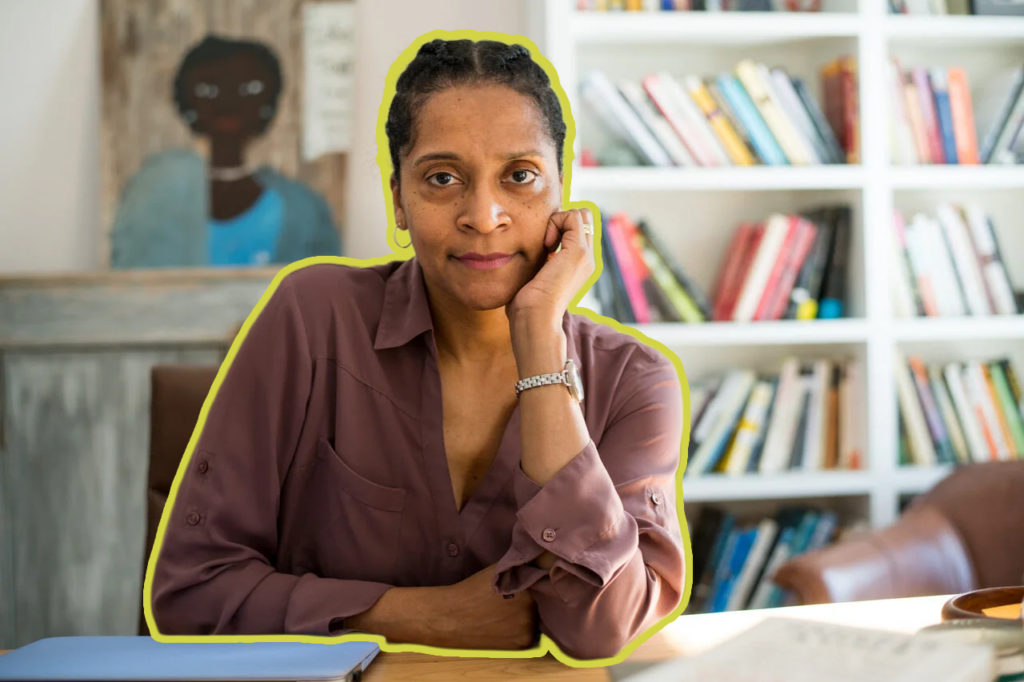
Emily Bernard was born and raised in Nashville, Tennessee, and is the Julian Lindsay Green and Gold Professor of English at the University of Vermont. Her first book, Remember Me to Harlem: The Letters of Langston Hughes and Carl Van Vechten, was a New York Times Notable Book of the Year. Her most recent book, Black is the Body: Stories from My Grandmother’s Time, My Mother’s Time, and Mine, won the LA Times Isherwood Prize for Autobiographical Prose. A 2020 Andrew Carnegie Fellow, Bernard has published work in The Times Literary Supplement, The New Yorker, The Yale Review, Harper’s, Oxford American, and O, the Oprah Magazine, among other publications.